Pre-Owned Stussy T-Shirt: What to Check Before You Pick One
A second-hand Stussy tee can cost around 25 to 60 euros for a recent cotton jersey, and well over 100 for a clean 1990s piece. The gap comes down to tag, print and body condition. Learn to read those three and you can judge almost any listing in a minute.
This page is a buyer's guide to the used market, not a shop. It covers how the shirts fit, how to date them, and where fakes usually slip up.
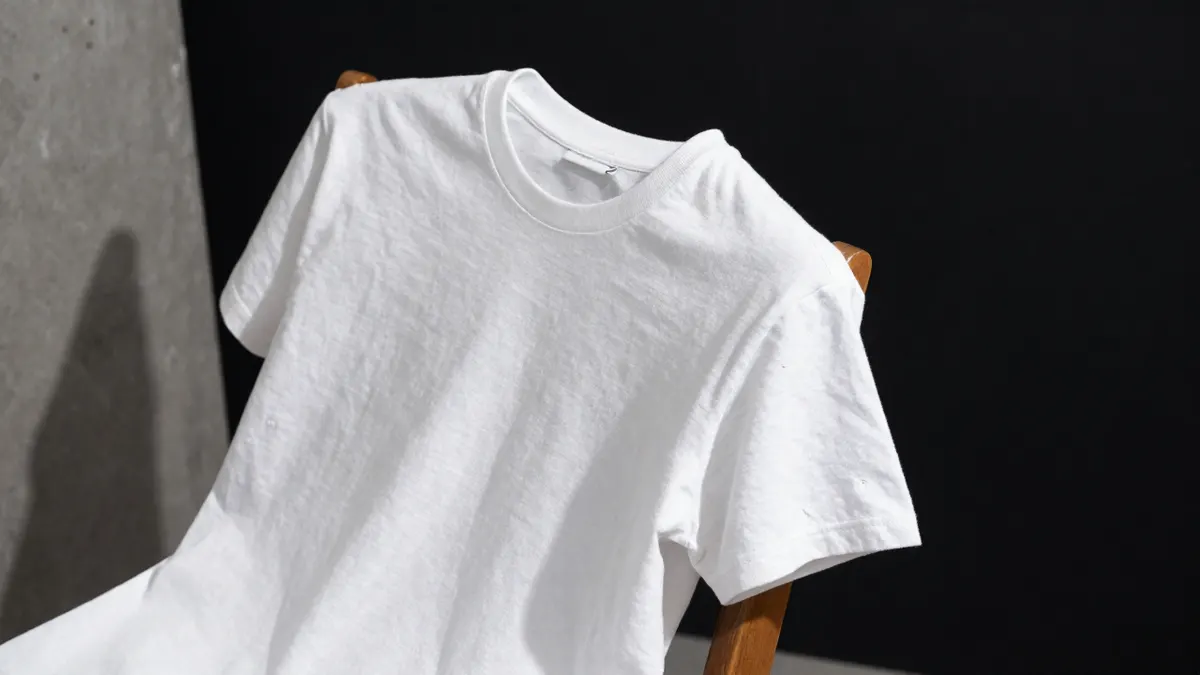
How a Used Stussy Tee Should Fit
Most current tees are cut boxy, with a slightly wide neck and a body that sits at mid-hip. Size M fits like a standard medium, but the shoulders drop a little. If you want a clean, close look, stay true to size. For the oversized silhouette seen on the street, go up one.
Older shirts behave differently. Single-stitch hems from the 1990s are often longer and narrower than modern ones, and cotton that has been washed for thirty years may have shrunk by 2 to 3 cm in length. Ask the seller for a pit-to-pit measurement. A medium usually lands near 52 to 54 cm across.
Measurements worth asking for
- Pit to pit (width)
- Collar to hem (length)
- Shoulder seam to shoulder seam
- Sleeve length from the seam
Dating the Tag and the Stitching
The neck label tells most of the story. Early shirts carry a woven tag with the signature script, and the "Made in USA" line is common on pieces from the 1990s and early 2000s. Later labels switch to printed neck tags or to a different woven design, and production moves to countries like Mexico, Peru or Honduras.
Look at the hem too. Single-stitch (one visible line) points to a pre-2000s shirt, though some reissues copy it on purpose. A double-stitched hem on a shirt claiming to be from 1993 deserves a second look.
Fabric weight matters. Modern tees are often around 180 to 200 g, a bit heavier than thin vintage jersey. Neither is better. They simply feel different.
Print Condition: Cracking Is Fine, Peeling Is Not
Light cracking on a screen print is normal and many buyers like it. It shows age. What you want to avoid is flaking down to bare cotton, ink that has faded unevenly into a ghost, or a print that feels stiff and plasticky, which can point to heat damage from a dryer.
Check the collar as well. A stretched, wavy neckband is the most common flaw on used tees, and it cannot be fixed. Yellow underarm stains are the second one. Photographs taken in daylight reveal both.
Spotting a Fake Stussy Shirt
Counterfeits get the big logo right and the small details wrong. Compare the stitching on the neck tag, the spacing of the letters, and the font of the care label. A tag that looks blurry or has crooked lettering is a bad sign.
Ask for a photo of the inside of the print too. Real screen prints sit into the cotton and show the weave. Cheap copies often look pasted on top. And a price that seems far too low for a rare graphic usually is.
Which Design to Look For
The plain script logo remains the easiest to find. If that is what you want, the Stussy tee page explains the core range, and the Stussy basic tee page covers the simple pieces that work with almost anything. Graphic fans tend to chase the Stussy 8 ball tee, which is one of the most copied designs and therefore the one to inspect hardest.
Seasonal collaborations and tourist-tour prints (the city-named shirts) hold value best. A clean example can sell for around 80 to 150 euros, depending on year and size.
Washing and Care
Wash inside out at 30 degrees and air dry. Skip the dryer, because heat is what cracks prints fastest and shrinks old cotton. A vintage shirt can handle a gentle cycle, but a hand wash is safer for anything with a fragile graphic.
Frequently Asked Questions
How much should a used Stussy tee cost?
Recent basic logo tees usually sit around 25 to 60 euros. Vintage or collaboration graphics start at roughly 80 and can pass 200 for rare designs. Condition and size shift these numbers a lot.
Does Stussy run big or small?
It runs boxy and a little roomy. Most people wear their usual size for a relaxed fit. Go up one size only if you want a clearly oversized shape.
Is a single-stitch hem always vintage?
No. It is a good sign for pre-2000s shirts, but modern reissues sometimes use it. Check the tag, the fabric feel and the print together before deciding.
Can cracked prints be repaired?
Not in any lasting way. Light cracking is stable if you wash gently and avoid heat. Heavy flaking will only get worse, so treat it as a reason to pass or to negotiate the price.