Carhartt Shorts: Models, Fit and What to Pay Used
Carhartt shorts come in a handful of cuts, and most of them trace back to workwear built for hard use. The tough cotton canvas, the double-stitched seams and the deep pockets are the same ones you see on the brand's trousers. Buying second-hand is the easiest way to get a pair that is already softened up, usually for around 20 to 45 euros instead of the 60 to 90 asked new.
Below you will find the models worth knowing, how the sizing behaves, and what to check before paying for a used pair.
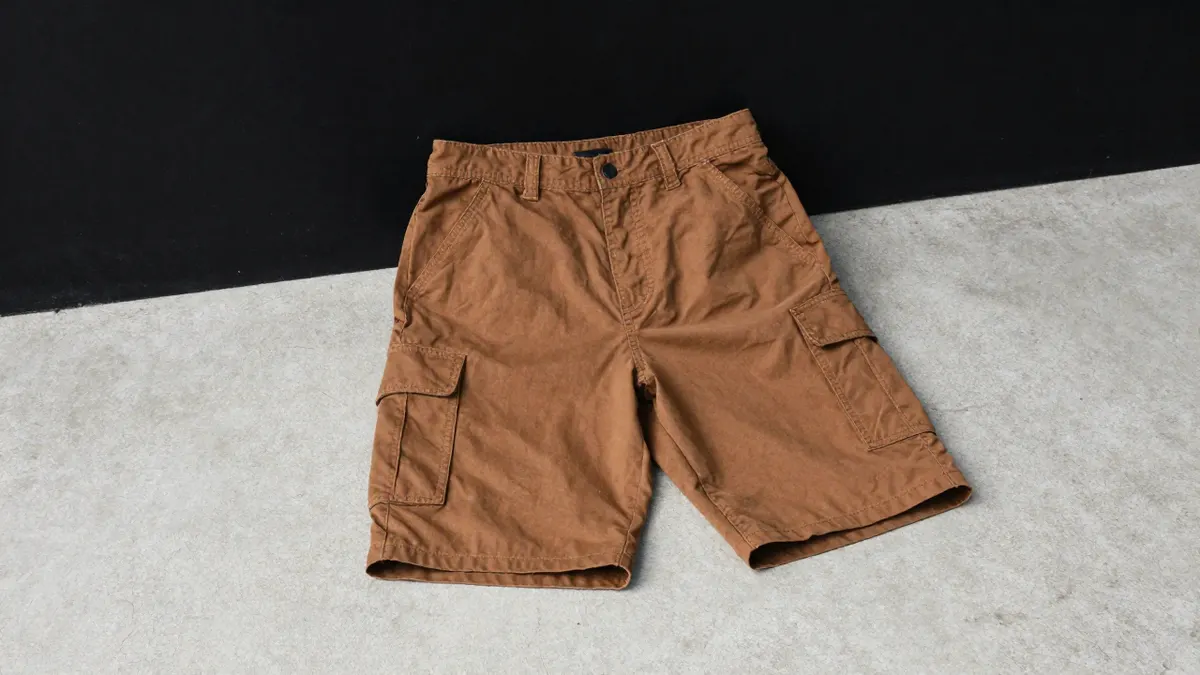
The main Carhartt shorts models
Names change between seasons, but the shapes stay consistent. Three of them cover most of what turns up on the used market.
Ripstop and canvas work shorts
The classic. Cotton canvas of about 8 to 12 oz, a relaxed fit and an inseam of roughly 9 to 11 inches (23 to 28 cm). The older "Rugged Flex" and "Rigby" lines are lighter and stretchier, which makes them better for summer. Canvas versions need a few washes before they stop feeling stiff.
Cargo shorts
Big thigh pockets, a loose leg, and a hem that sits at or just below the knee. The Carhartt WIP cargo styles are cut closer and sit a bit higher on the waist, which suits a street look better than the work-line pairs.
Swim and sweat shorts
Less common second-hand, and mostly logo-driven. Check the elastic and the drawcord before anything else.
Carhartt cargo bermuda: what it really means
People searching for a Carhartt cargo bermuda usually want a longer, knee-length cargo short. Bermuda is simply the European word for a short that ends around the knee. In Carhartt terms, look for an inseam of 10 to 13 inches (25 to 33 cm) and side pockets with a snap or button flap.
The WIP Regular Cargo and the older Cypress-style cuts come closest. Pick a straight or relaxed leg, because a tapered cargo bermuda looks awkward on most people. Wear them with a heavy tee, something like a Stussy basic tee, and plain trainers.
Sizing Carhartt shorts second-hand
Work-line shorts run true to the US waist size printed on the tag, but they are cut generously through the thigh. Many people take one size down if they want a cleaner fit. WIP pairs are sized closer to European norms and tend to be a touch smaller.
Always ask for a flat waist measurement. A tag reading 32 can have shrunk or been stretched, and a real waist of 40 to 42 cm laid flat is what a true 32 should give you. Canvas shrinks about 2 to 3 percent in a hot wash, so go slightly large if the pair is unwashed.
What to check before paying
- Seams around the crotch and back pockets, where canvas wears first
- The zip and the button, which are costly to replace
- Fading: even wear is attractive, patchy bleach marks are not
- The tag and the square label on the back pocket, to spot fakes with sloppy stitching
Paint and oil stains are normal on true work pairs. Decide beforehand if you want that history or a clean pair, because the price gap can reach 15 euros.
If shorts are only half the plan, the same canvas logic applies to Carhartt pants, and the fit notes above carry over. For a dressier summer short from another label, Burberry shorts sit at a very different price level, often 80 euros and up used.
Frequently Asked Questions
Are Carhartt shorts worth buying used?
Yes, in most cases. The canvas is built to last for years, so a pair that has already been washed many times is often more comfortable and costs about half the new price.
How long are Carhartt shorts?
Most work models have an inseam of 9 to 11 inches, which ends just above the knee. Cargo and bermuda styles can reach 13 inches. Check the listed inseam, since it is not always on the tag.
Do Carhartt shorts shrink?
Slightly. Cotton canvas can lose 2 to 3 percent after a hot wash and a tumble dry. Washing at 30 degrees and air drying keeps the fit stable.
How can I tell if a pair is fake?
Look at the stitching density, the font on the label and the quality of the hardware. Real pairs have even, tight stitches and a clean, crisp square patch. Odd spelling or thin, shiny fabric is a bad sign.